Leaving PDFs in the past: how online brand guidelines empower clarity, consistency, and control

For decades, brand guidelines and brand books were produced as impressive physical documents – carefully assembled binders or high-quality printed booklets that detailed every aspect of a brand’s identity. Eventually, those majestic binders made the leap to digital, becoming PDFs housed centrally in business shared drives or emailed around the team. For a while, these documents felt like the height of convenience and were considered the gold standard in brand communication. They captured the brand beautifully – at least as it existed in that moment.
But brands don’t stay still, and static documents do. As soon as changes are made, they’re no longer reflected in the original file. Teams start juggling multiple versions, each claiming to be ‘final’. Someone updates the colour palette, but Alan in accounts is still working from a two-year-old PDF. Another team downloads a copy, forgets where they saved it, and reuses outdated templates. Meanwhile, the guidelines themselves can’t show how a logo animates, how motion behaves, or how interactive elements should respond. The document becomes a frozen snapshot of something that’s constantly evolving, cracks begin to show, and crucial brand authority hangs in the balance.
Modern teams need something that can move at the same pace as the brand itself. And no matter how polished or well-organised a PDF may be, it simply can’t meet this expectation. This is where online brand guidelines shine. Flexible, dynamic, and collaborative, they’re a true living hub built for the way brands operate today – not to mention, a far more efficient way to maintain consistency at scale.
From manuals to living systems
Brand guidelines have shifted from being end-of-project reference manuals to strategic functional systems. They’re now tools that support real-time decision-making – living assets designed to guide collaboration and make it easier for anyone in the business to show up on brand with confidence. Today, the expectation is not simply to outline the rules, but to provide the infrastructure teams need to apply them accurately and consistently.
Traditionally, brand books were created at the end of a rebrand or major identity project. They captured the visual and verbal foundations of the brand, including logo usage, colour palettes, typography, tone of voice, photography style, graphic elements, and all the nuances that make a brand recognisable. Once shared, they were meant to serve as the definitive source of truth. But ‘definitive’ is a generous term, because within months – even weeks – brands change, and PDFs don’t.
This is where the cracks start to show: a single update triggers version chaos, and soon multiple files are circulating, each claiming to be the ‘final’ one. This lack of version control is one of the most persistent and costly challenges for businesses. Teams begin to drift, inconsistencies creep in, and suddenly one employee is using the wrong shade of a logo colour while another picks a font that looks ‘close enough’. Meanwhile, as different departments piece together fragments of phrasing from outdated PDFs, your tone of voice starts to splinter. It doesn’t take long before your brand starts to look like three different businesses at once. Customers notice these inconsistencies, even if only subconsciously, and it can chip away at hard-earned trust.
The limitations of a static PDF
The problem goes beyond version control. Static documents can’t demonstrate dynamic brand behaviours – how a logo animates, how motion principles work, or how interactive components should respond. Asset distribution becomes fragmented, and for multi-location or cross-functional teams, PDFs can be cumbersome to share and manage. They’re simply not built for modern collaboration. They can be heavy, clunky, and demand constant re-exporting. And as businesses grow – whether across locations or even in headcount – PDFs fall even further behind, failing to meet the expectations of teams accustomed to real-time tools and beginning to feel like boulders being rolled uphill.
Online brand guidelines address all of these pain points directly.
A centralised source of truth
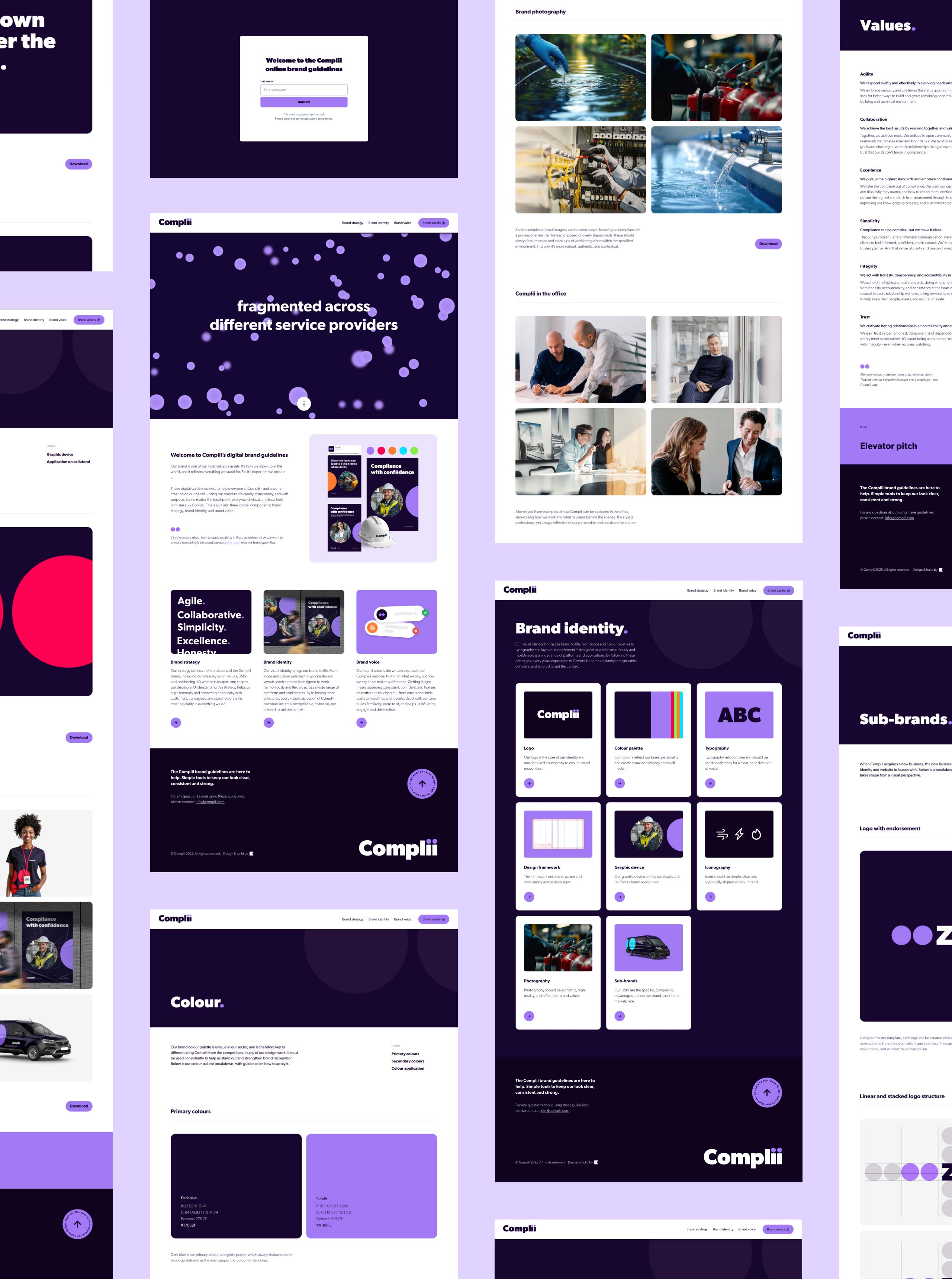
By moving guidelines online, brands gain a living, dynamic system that updates in real time. Instead of a static and easily misplaced document, it becomes a centralised, accessible, and continuously evolving resource. When a change is made, it’s reflected immediately for everyone – no exporting new versions, no outdated attachments being passed around, and no guesswork about which file is the most up to date. Teams visit a single URL and can rely on an accurate and authoritative system that is always current. This one link serves as the true single source of truth, rather than nine different documents pretending to be.
Online guidelines also allow brands to demonstrate behaviours rather than simply describe them, which is something static documents never could. Animations, videos, voice examples, hover states, interactive components, and real-world templates can all be embedded directly into the system. This shift transforms the guidelines from a conceptual manual into a practical toolkit that supports easy implementation, while empowering teams to execute with confidence.
Sharing becomes frictionless too. Teams send a secure URL, which is password protected and hidden from search engines to keep internal materials private, instead of a giant email attachment that can make its way to anyone. And, because visual assets can be downloaded individually or packaged neatly into a single global ZIP file, it’s easier than ever to get exactly what you need, whenever you need it.
Even better, online brand guidelines are fully responsive. So, anyone can access them on a phone while running between meetings, without pinching to zoom through a 40-page PDF.
Built for modern teams
This shift mirrors how modern businesses operate. Many teams are remote or hybrid, many collaborate across departments, and brand touchpoints now span every corner of the organisations. A modern brand system supports all these people – not simply by defining rules from a distance, but by enabling them to apply the brand exactly as intended.
More than a technical upgrade, this move to digital signifies a crucial mindset shift. Your online brand guidelines become a dynamic system instead of a static rulebook. They empower teams rather than restrict them. They give people the confidence to make on-brand decisions instead of making them second guess themselves. And as your business grows, your brand system grows with it, rather than needing to be reinvented again and again.
Scalable, flexible, and always current
Digital brand guidelines also scale naturally with growth. As a business evolves – expanding into new markets, introducing sub-brands, refining its messaging, or updating its visual identity – the digital guide evolves in parallel. Instead of being replaced periodically, it becomes an active, ongoing representation of the brand’s current identity and future direction.
There comes a point for most growing businesses when static brand guidelines are no longer sufficient and the PDF-based approach breaks down. It might be during a rebrand, when clarity and consistency are critical – the last thing you want during a fresh identity launch is to create confusion. Perhaps it’s when version control issues and inconsistent branding begins to impact external perception. Or it might simply be the slow accumulation of small frustrations that eventually signal it’s time for something better. Whatever the catalyst, the shift to online brand guidelines is often a natural and necessary step towards operational maturity.
Let the PDF retire gracefully
A static brand book might sit untouched for years, but online brand guidelines become a living resource used every single day. In an environment where digital touchpoints define brand perception, brands simply can’t afford inconsistency. An online brand guide creates alignment across all forms of communication, strengthens internal understanding, and ensures every expression of the brand reflects its intended identity. It’s built for how modern teams work.
Static brand books may once have met the needs of their time, but the demands require more flexibility, more clarity, and more accessibility. We’ve seen firsthand how transformative this shift can be, both for our own brand and for the brands we partner with. When teams have a central, interactive home for their brand, something clicks. The brand becomes clearer, stronger, and more cohesive across every touchpoint.
So yes, the traditional PDF had a great run. But now, it’s time to let it retire gracefully and give your brand a system that can evolve as quickly as your business does.
Wondering how your own brand guidelines measure up? Whether you’re planning a full rebrand or simply want to level up your current system, get in touch and let’s explore how we can support your next stage of growth.
If you want to keep up to date with the crew, don't forget to sign up to our newsletter to benefit from digital marketing expertise, as well as exciting opportunities to improve your business' performance.

Written by Charlotte Conqueror
With a focus on accessibility, responsive design, and creative innovation, senior UI/UX designer Charlotte delivers captivating digital experiences that engage users and elevate brands.
News and insights
Why we’re not changing how we write because of AI
As AI becomes better at mimicking techniques skilled writers have used for generations, our approach won’t change. Find out why we’ll continue putting human expertise at the heart of the writing process, and why protecting your brand voice has never been more important.
Read more